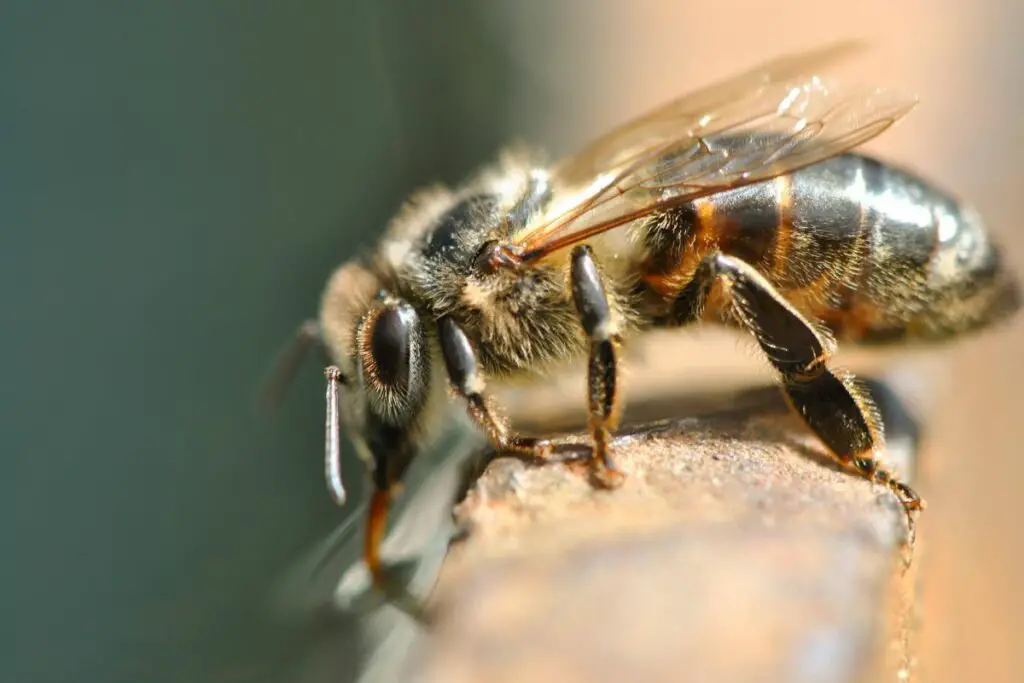
Found a bee that can’t fly? Don’t worry we’ve got you and your furry friend covered with our helpful guide on how to help a bee that can’t fly.
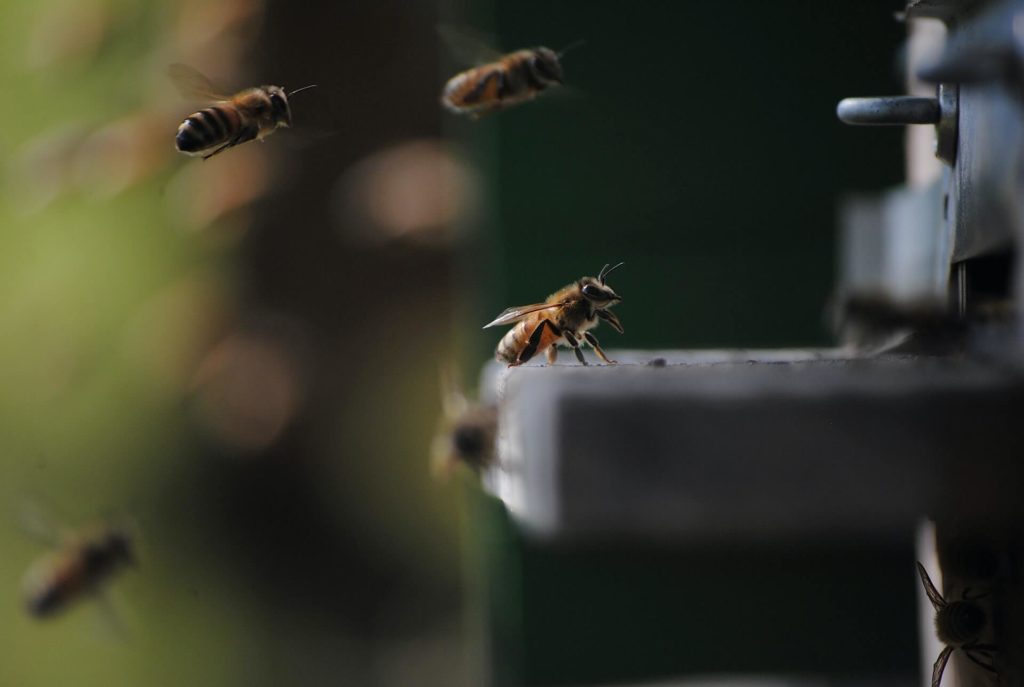
Bees fly directly from their hives and nests either to forage for resources or to mate and reproduce.
Grounded bees are a common sight, they can signal a greater problem within the colony or simply just a bee resting between flights.
Let’s walk you through how to tell if your buzzing friend needs a hand.
Warmth-first: the quickest way to help a cold or sluggish bee
A bee that “can’t fly” is often not hungry; it’s cold, damp, or simply needs time to recover.
Start with warmth (do not feed). If the bee is in shade, in the wind, or on a cold surface, move it to a sheltered, sunny spot for 2–5 minutes. Even small temperature changes can make a big difference.
Look for these signs of improvement
- It starts cleaning its antennae or legs
- It becomes more upright and alert
- It begins to crawl with purpose
- Wings start to vibrate (warming up)
When feeding makes sense. Only consider a tiny emergency feed if:
- It’s clearly weak and not improving after warmth, and
- There are no flowers nearby, and
- It’s safe to intervene (not actively nesting, not showing obvious severe injury)
If it perks up, place it near flowers. Once it’s moving, your best next step is to place it beside flowers and let it choose what it needs.
If you often spot struggling bees when you’re out and about, keep an emergency option on you with one of our handy bee revival keyrings.
A bee is not moving but is alive
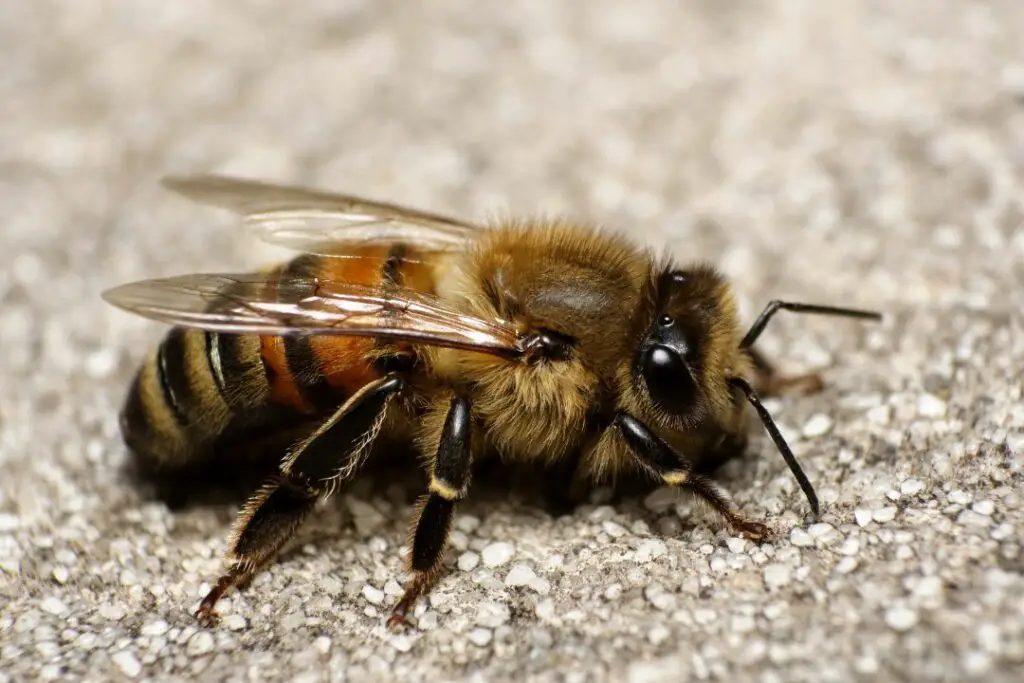
Buzzing from flower to flower can be tiring work; large bumblebees, in particular, can expend vast amounts of energy just by keeping their large abdomen and thorax above the ground.
This energy-intensive work can cause bees to rest between trips to flowers or before returning to the hive with their precious cargo.
Bumblebee queens, in particular, have been observed resting on flowers for 30-45 minutes.
Before you take any action to help a bee that isn’t flying make sure you wait at least 45 minutes to ensure it isn’t just rejuvenating between flights.
Helping bees is fantastic when they’re in trouble but trying to help a healthy bee that is just resting will simply distress it and cause it to take flight before it’s ready.
In a worst-case scenario, this could cause the bee to become exhausted and disoriented during the flight home and never reach the safety of the colony.
Be Ready to Help a Tired Bee When It Matters Most
Carry a simple bee revival kit keyring so when you spot an exhausted bee, you can give it a quick, bee-safe energy boost and help it recover. Handmade in the UK with eco-friendly packaging, it’s a small action that makes a real difference.
How can you help?
If a bee is just resting the best thing you can do is simply leave it in peace.
Only move a resting bee if it is in clear danger, such as from road traffic, footfall, or professional/building work in the area.
In these situations, you can try and place the bee on a leaf or flower to move it to a more suitable location.
Try to avoid picking up the bee with your hand as this could lead to a nasty sting (remember the bee doesn’t know you’re trying to help).
In most cases, your bee will simply relocate when you approach but if it happily accepts your offer of transport try to find a wildflower area near where you found it.
*Pro tip – Colourful flowers rich in nectar and pollen are always a good indicator of suitable relocation spots.
What to give a bee that can’t fly
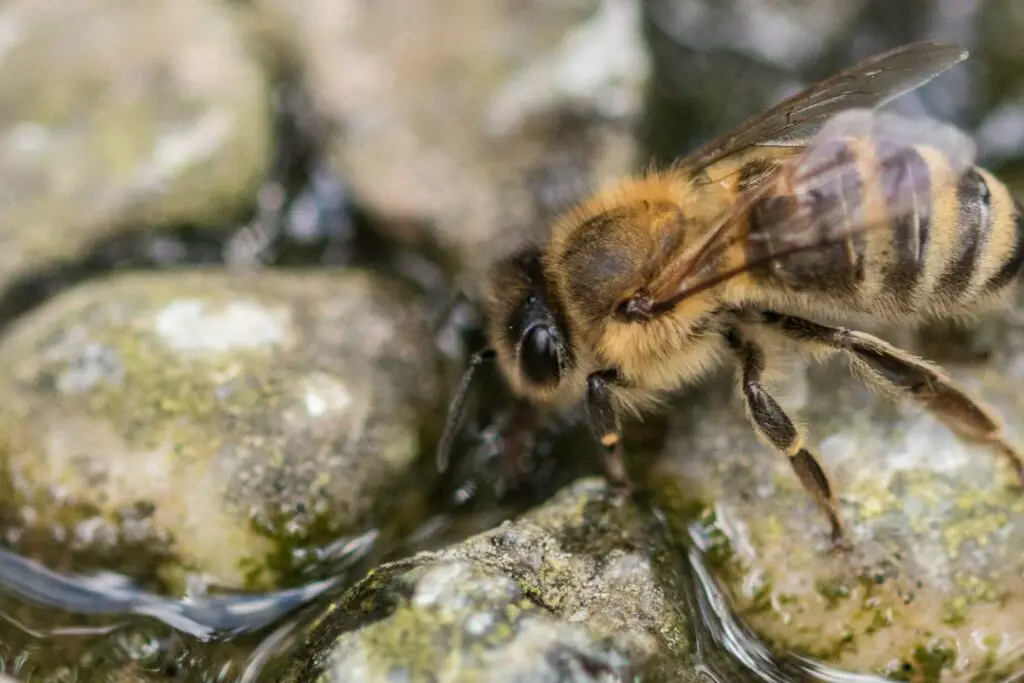
If you find a bee that can’t fly in an urban setting without any suitable resources, it may be struggling to find the energy to take flight again.
Bees’ natural habitats are slowly being replaced with domestic and commercial property development leading to a lack of resources for foraging bees.
How can you help?
You can help tired, exhausted bees by creating a simple sugar-and-water mix, or, better yet, make sure you’re always ready to save a bee with our handy Bee Revival Kit, which contains a syrup specially formulated for bee health.
If you don’t have a revival kit on you, you can learn more about how to revive a bee with sugar water in our helpful guide.
Is it burrowing?
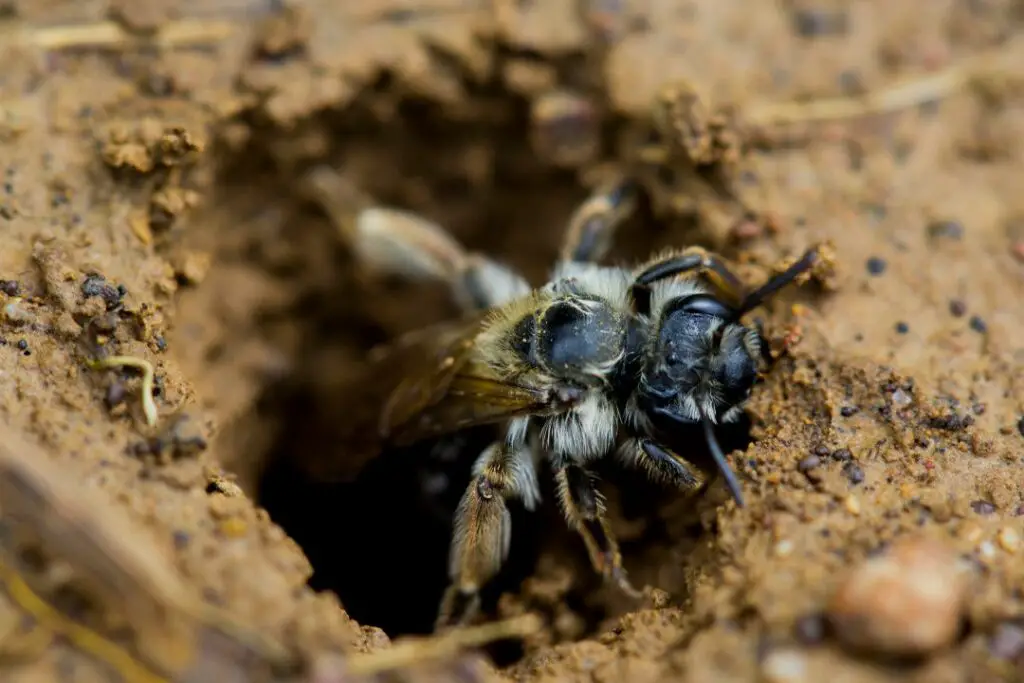
Believe it or not, some bees make their nests in the ground.
If you see a bee on the ground, it may be protecting its nest at ground level rather than simply not flying.
A few species of solitary bees even hibernate in the ground over winter, while others place their young larvae in specially constructed underground nests, sealing them with a secretion to form a waterproof layer around the vulnerable young bees.
How can you help?
Bees burrowing and hibernating in the ground are simply going about their normal daily activities.
If you can find a way of cordoning off the area where your bees are nesting underground, you can reduce the risk of garden work or footfall affecting the nest.
Other than protection leave the bees to their own accord and if all goes to plan young larvae or overwintered bees will emerge as spring begins to warm up the ground.
Does your bee have no wings?
Some bees can’t fly because they have lost their wings or never developed them.
Bees without wings are a concerning sight and can indicate DWV, an RNA virus called Deformed Wing Virus.
This catastrophic virus affects entire honeybee colonies, and it can also spread to some bumblebee species.
Symptoms include underdeveloped wings, abdomens, legs and thorax.
Bees severely affected by this virus will have considerably shorter lifespans and may be ejected from their nest or hive for the greater good of the colony.
Predators can also include birds, other insects, and even bears that prey on bees and their honey stocks.
How can you help?
Unfortunately, bees that can’t fly due to missing or damaged wings have very little chance of survival.
Returning a bee with no wings to the nest or hive could spread diseases amongst the colonies’ other inhabitants, and the bee in question may have already been ejected for the nest or hive’s welfare.
The best course of action, in this case, is simply to leave the bee alone. If the bee is at immediate risk, you can move it to a sunny spot, but sadly, this will just prolong the inevitable.
Is your bee wet?
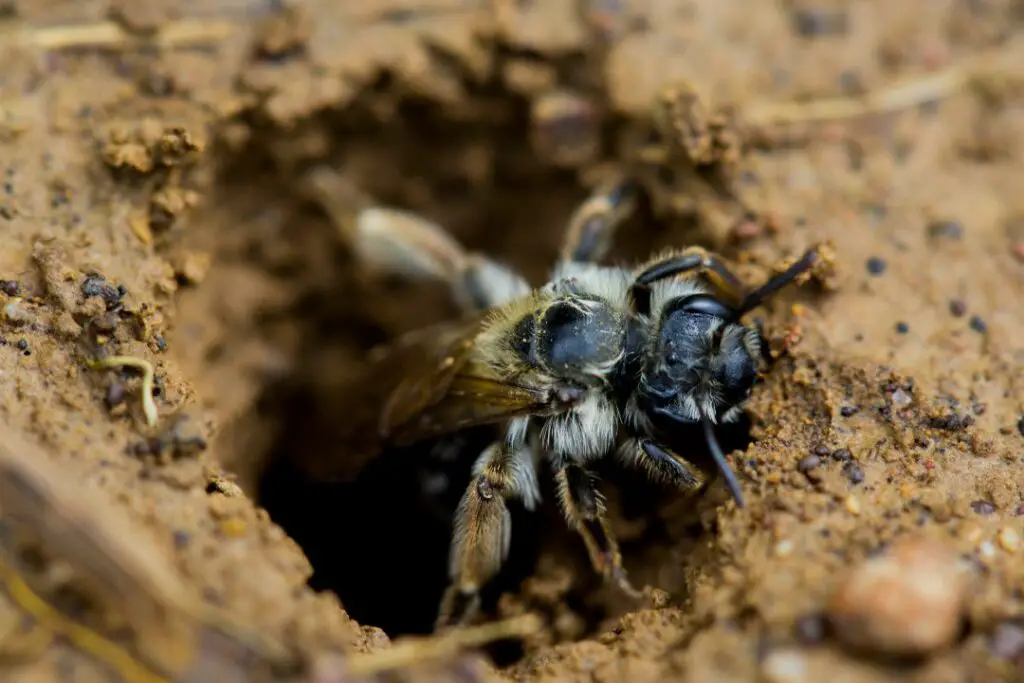
Sometimes a bee can’t fly because its wet, and its thin, diaphanous wings become waterlogged easily.
Heavy rains or mishaps while drinking can leave bees saturated and unable to take to the skies.
How can you help?
We never recommend bringing bees inside your house; this is not their natural environment, and the lack of natural light and entrapment will distress them.
The best course of action is to carefully move your wet bee to a suitable location to dry off while still outside.
If it’s raining, try to find some natural shelter, such as a tree or large bush, and place the bee beneath it to slowly dry off.
If it’s sunny, try to place your bee in direct sunlight.
Waterlogged bees will regularly bask in the sun until their wings and body are dry before taking flight again.
In conclusion
In most cases, the best way to help a honey or bumble bee that can’t fly is simply to leave it be. While we love the idea of helping bees they aren’t pets, and human interaction can be terrifying for them.
If you’re looking for a great way to help bees, don’t miss our Revive a Bee® Bee Revival Kit, which means you’ll always be ready to help a bee in need.
Make sure you don’t miss our other short reads on bees below.