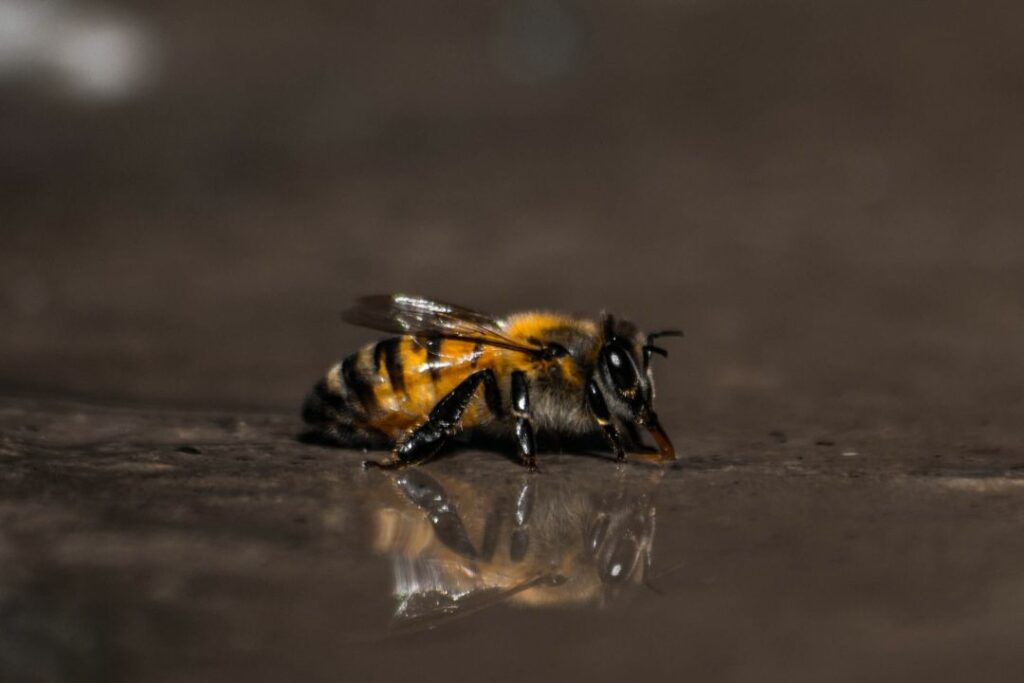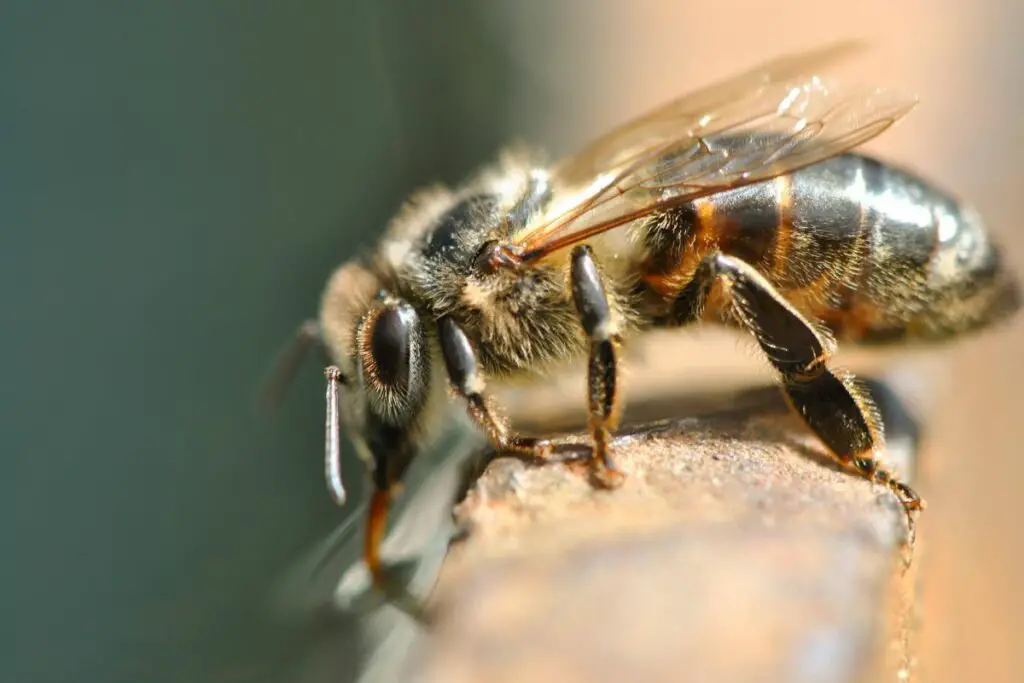
A dying bee may have tattered wings or be writhing on the ground. A tired bee may appear slower and more lethargic but will still have intact wings and respond to external stimuli.
*Important tip – If you’re not sure if your bee is sleeping or dead, the best course of action is to simply let it be.
But there are some key signs to look for to help you diagnose the issue, and, in some cases, steps you can take to help.
Tired, Dying Or Just Resting? The Quick Comparison
If you only read one part of this page, make it this one.
| What you can see | Tired or cold | Dying | Resting or sleeping |
|---|---|---|---|
| Wings | Intact, folded neatly | Tattered, torn or deformed | Intact, folded neatly |
| Movement | Slow but purposeful | Weak and uncoordinated, dragging or circling | Almost still, then normal on waking |
| Response to touch | Moves away or repositions itself | Little or no reaction | Stirs slowly, then becomes alert |
| Where you found it | Pavement, path or lawn | Often on its side or back | On or under a flower, still gripping |
| Tongue | Tucked away | May be stuck out, a sign of pesticide poisoning | Tucked away |
| Pollen on its legs | Often | Rarely | Often |
| Improves with warmth and shelter? | Yes, usually within minutes | No | Wakes in its own time |
| What to do | Move it to safety, and offer sugar water only if there are no flowers nearby | Shelter it and leave it in peace, and do not force-feed it | Leave it alone |
How long is too long? Resting lasts longer than you expect. The Bumblebee Conservation Trust found that resting queen bumblebees stayed put for around 30 minutes on average, and as long as 45. If your bee has not moved at all after 45 minutes, and it’s cold, that’s the point at which it may genuinely need help.
The 30-second decision tree (resting vs distressed vs end-of-life)
Use this quick check before you intervene.
- Is it on flowers and moving a bit?
Likely resting/feeding. Best action: leave it alone. - Is it in danger (pavement, rain, foot traffic)?
Best action: move it to a sheltered spot nearby. - Does it improve within a few minutes with warmth and shelter?
If yes, it probably didn’t need feeding — place it near flowers and give it time. - Is it severely injured or unresponsive?
Signs: unable to stand, dragging body, heavily damaged wings, no improvement at all.
Best action: keep it sheltered and don’t force-feed. At this stage, it may not be recoverable. - Only consider feeding if all three apply
- No flowers nearby
- It’s weak and not improving with warmth
- You can offer a tiny amount safely without drowning risk
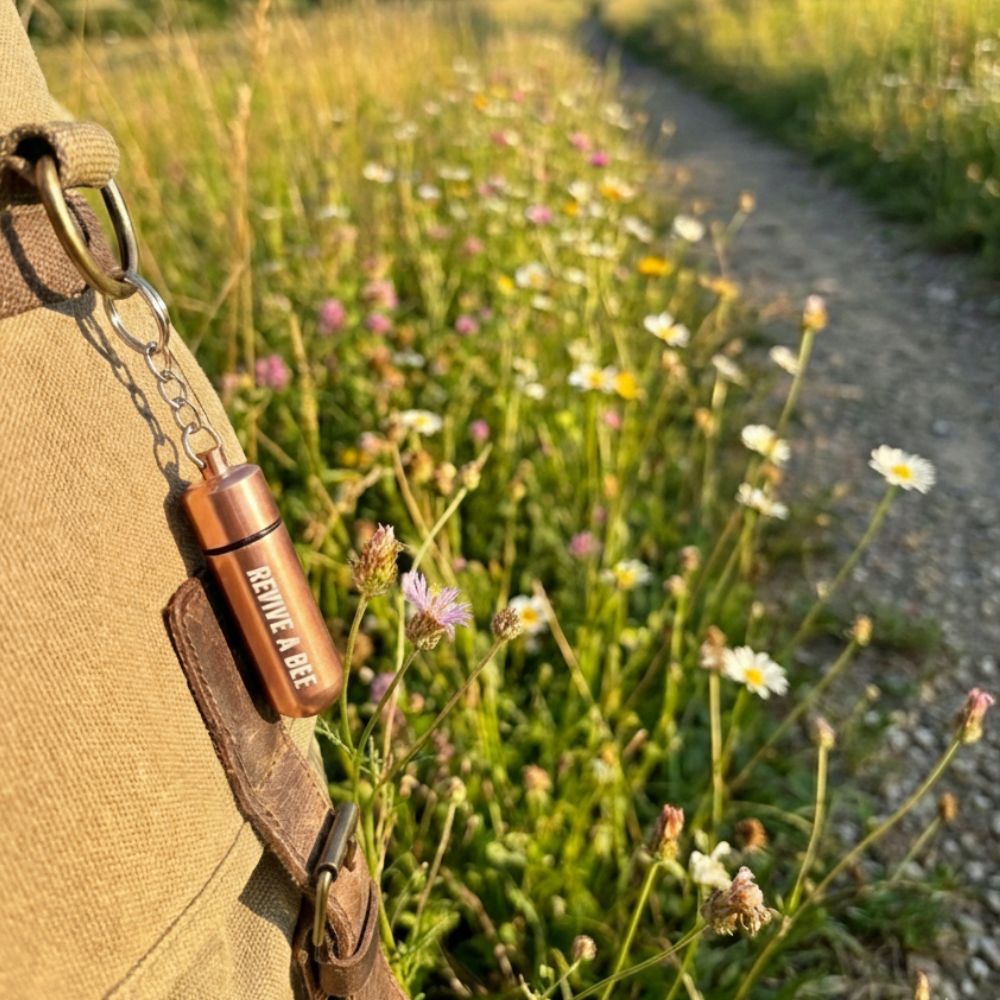
If you want an emergency option for flowerless areas, make sure to grab one of our bee revival keyrings for bee thirst aid on the go.
How To Know If A Bee Is Dying
Signs and symptoms that your bee is just coming to the end of its natural life.
Unresponsiveness to stimuli
When a bee is dying, it becomes unresponsive to stimuli like touch or movement. This can present as appearing dazed or confused.
This can result from various factors, such as pesticides, disease, or old age.
Tattered or torn wings
A bee with tattered or torn wings is unlikely to survive for any extended period of time. The wings are crucial for a bee’s survival so it can fly and forage for food.
When a bee’s wings are damaged, it loses its ability to fly and, more importantly, escape predators.
There are lots of possible reasons why a bee’s wings start to wear and tear like injury, exposure to harsh environmental conditions or DWV (deformed wing virus).
Be Ready to Help a Tired Bee When It Matters Most
Carry a simple bee revival kit keyring so when you spot an exhausted bee, you can give it a quick, bee-safe energy boost and help it recover. Handmade in the UK with eco-friendly packaging, it’s a small action that makes a real difference.
Why Is A Bee Walking In Circles?
A bee walking in circles is disoriented rather than dying. In the UK the usual causes are cold, exhaustion or pesticide exposure, and the first two are the ones you can actually do something about.
Circling, spinning and crawling in loops all point at the same underlying thing: the bee’s navigation and coordination have stopped working properly.
- Cold. A bee needs its flight muscles at around 30°C to take off. Below that it can still walk but cannot fly (and it will often circle as it tries). This is the most common caseand the most fixable. Warmth and shelter usually sort it out within minutes.
- Exhaustion. A bee that has run out of fuel a long way from flowers behaves the same way. Male bumblebees late in the season are especially prone to it, having spent the day patrolling rather than feeding.
- Pesticide exposure. Neonicotinoids impair navigation and coordination, and circling is a recognised symptom. A tongue left sticking out is a strong additional sign.
- Deformed wing virus (DWV). Spread by Varroa mites and mostly a honey bee problem. Look for crumpled or stunted wings alongside the circling.
- Parasites. In the UK, conopid flies (bee-grabbers), such as Sicus ferrugineus parasitise bumblebees and change their behaviour, including driving them to burrow into soil.
One myth worth clearing up. Search for this and you will quickly find the “zombie fly”, Apocephalus borealis, which lays its eggs in the abdomens of bees and makes them walk in circles before they die. It is a real parasite and it does cause exactly that behaviour, but it is a North American species, recorded in places such as California, Oregon and Vermont. If you are in the UK, it is almost certainly not what you are looking at.
What to do. Move the bee somewhere sheltered and out of the wind, then give it fifteen minutes. If it was cold, it will often warm up and fly off on its own. If there are no flowers nearby and it still is not improving, that is the moment for a drop of sugar water, or a bee revival kit if you are away from home.
*Interesting fact – Other bees in the colony can sense when a nestmate has been parasitised and will eject it from the nest or hive.
Difficulty moving or walking
A dying bee will normally have difficulty moving or walking. They can look weak and uncoordinated and will struggle to lift off the ground and take flight.
This could be due to disease, injury, or exposure to toxins, but it’s worth noting that having been exposed to neonicotinoid pesticides, bees can experience impaired mobility and coordination.
*Important tip – Bees poisoned by pesticides will often have their tongue sticking out when they expire.
Lack of grooming
Bees are fastidious little creatures that spend a lot of time grooming themselves and their nestmates.
A dying bee may stop grooming itself, leading to a dishevelled appearance.
This is common in nests and hives infected with Varroa mites.
Signs That A Bee Is Tired
Now we’ve covered all of the things you can look out for to tell if a bee is close to the end of its life, let’s look at the positive signs your bee’s just puffed out.
Slower movements
A tired bee will be much slower than usual. It can take longer to fly from flower to flower and will move much more slowly on the ground.
This symptom is a natural part of a bee’s daily energy cycle and is not cause for alarm.
Resting more frequently
Tired bees rest more frequently than usual. During this period, they take breaks on flower petals or on the ground to conserve energy.
This is just a natural part of a bee’s daily energy cycle and isn’t something you need to worry about.
Grooming itself
A tired bee will often take breaks to groom itself and maintain its hygiene.
These small stops help the bee rest and regain its energy after a busy day of gathering nectar and pollen for the colony.
Responding to stimuli
A tired bee will respond to stimuli like touch or movement. This means it will still move away or fly off if it feels threatened.
This symptom indicates that the bee is still alert and aware of its surroundings.
Intact wings
Healthy wings mean the bee can take flight, so it’s another tick for the tired rather than dying category.
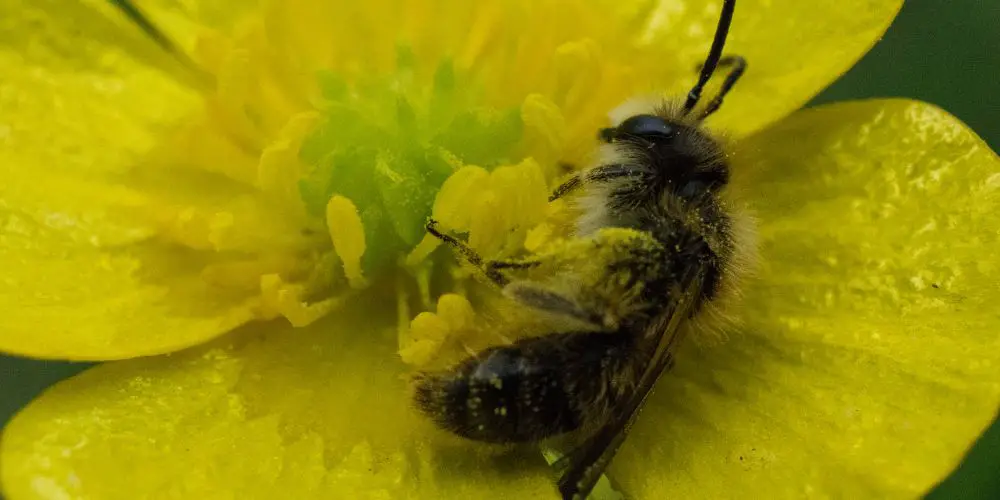
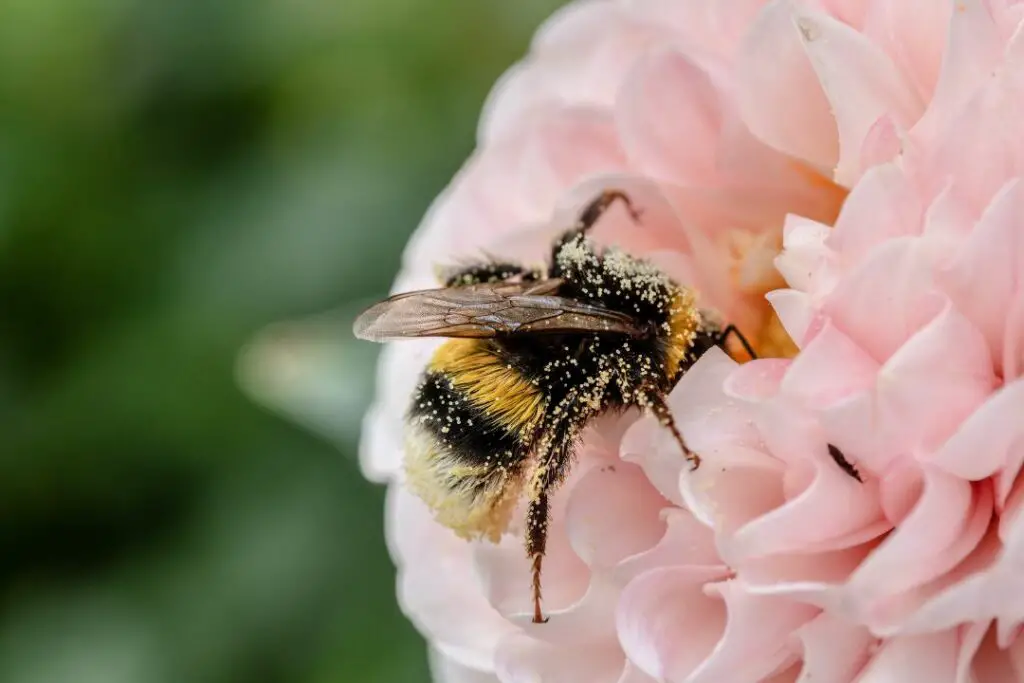
Carrying pollen or nectar
A bee that is carrying pollen or nectar is likely a forager that’s been out collecting food for the hive.
This indicates that the bee is still able to work and is not in immediate need of help. The best course of action is to let the bee continue its work and conserve its energy.
How To Tell If A Bumblebee Is Dying Or Tired
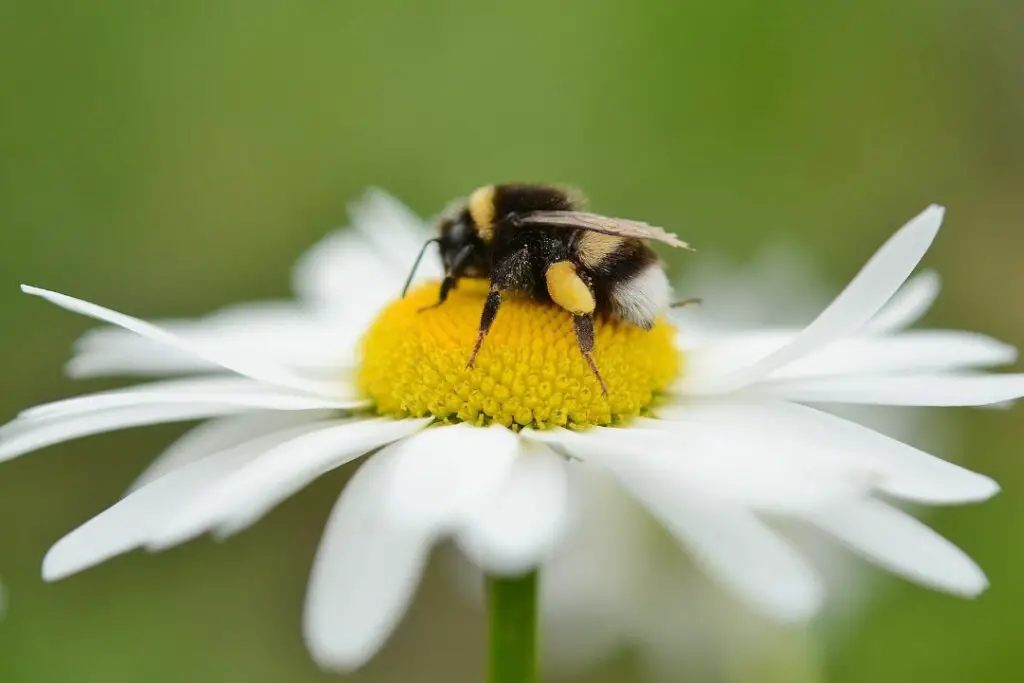
Bumblebees are the ones you are most likely to find sitting on a path looking sorry for themselves. They forage in cooler, duller weather than honey bees do, which means they get caught out by the temperature far more often. Everything above still applies, but a few things are specific to bumble bees and worth knowing.
Check the edges of the wings
Ragged, frayed wing edges on a bumblebee usually mean age rather than illness. A worker bumblebee lives only about four to six weeks, and its wings visibly wear down over that time. A bee with tattered wing margins and no other symptoms is most likely simply old, and no amount of intervention changes that.
A large bumblebee on the ground in spring is probably a queen
In early spring, the very large bumble bees you see low to the ground are queens that have recently come out of hibernation and are searching for a nest site. They rest on the ground as a matter of routine, and as noted above, often for half an hour at a time.
It is worth being patient with these, because a single queen represents an entire colony that has not been founded yet. If she really is cold and stranded with no flowers around, she is the bee most worth helping.
Late-summer males are usually just tired
From late summer onwards, male bumblebees leave the nest for good and spend their days patrolling for queens. They frequently sleep out on flowers overnight and can look alarmingly still first thing in the morning. A male bumble bee sitting motionless on a flower at dawn is almost always fine. He is waiting to warm up.
If you do decide to feed one, the Bumblebee Conservation Trust recommends a 50/50 mix of white sugar and water, offered as a drop or two beside the head. You will also see a thicker mix of 2 parts sugar to 1 part water recommended, usually attributed to the RSPB. Either works for a single bee, and we explain the difference in our guide to reviving a bee with sugar water. Never use brown sugar, which is harder for bumblebees to digest, and never use honey, which can carry pathogens that make them ill.
How You Can Help A Tired Bee
If you’re dealing with a tired bee, then you’ve got a few things you can do to help.
Place it on a flower
If your exhausted friend is in an unsafe location like a footpath or a roa,d then your first port of call is to remove them from danger.
Using a leaf or something similar, you need to gently lift your bee up and onto the leaf while being incredibly careful not to damage its delicate legs and wings.
Try not to move them too far so they can still get back to the colony, and aim to place them on or around flowers; bonus points if they’re rich in nectar.
Create a sugar water solution
If you find your bee in an urban environment where flowers are scarce, you can make a sugar water solution to give it the energy it needs to return home.
Head over to our page on how to revive a bee to find out exactly how to make your sugar-water solution and safely feed it to your bee.
Use your bee revival kit
Found a tired bee when you’re out on the go?
Our bee revival keyrings are the perfect way to help thirsty bees when you’re out and about on your travels.
It’s a handy keyring that contains a special liquid, just like the nectar bees consume every day.
It’s a safe, healthy way to give your bee the boost it needs to get back to the hive, and you can carry it with you wherever you go.
If you are weighing one up, the Bee Revival Kit FAQs cover safety, refills and what is actually in the vial.