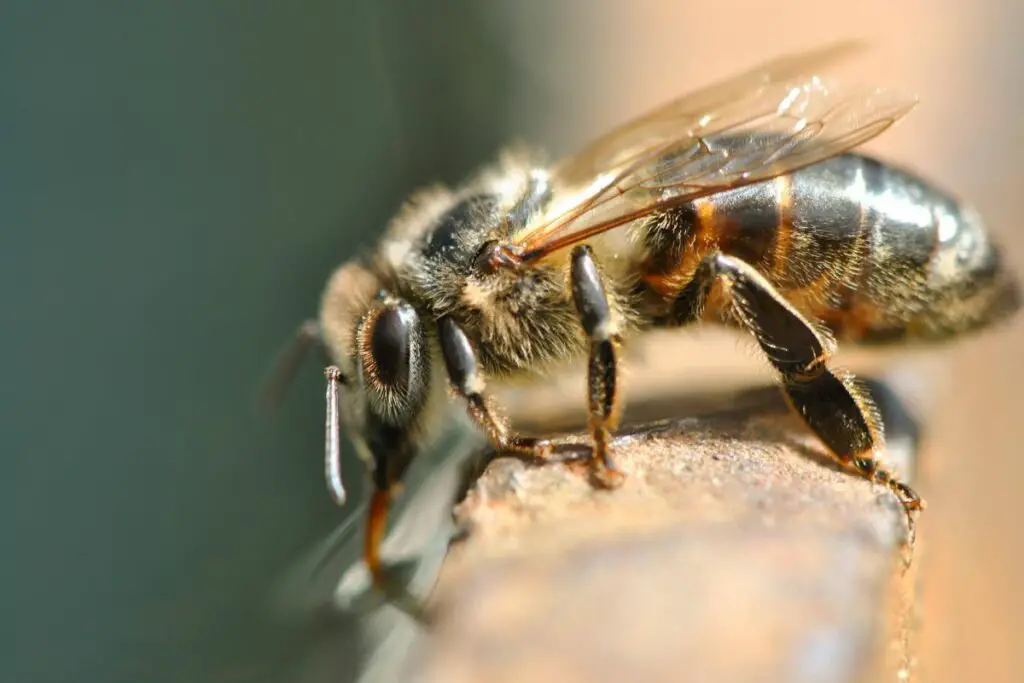
Found a tired bee on the ground? Here’s what to do (in 60 seconds).
- Step 1 – Check if it’s just resting (watch for 30–45 minutes if safe/dry)
- Step 2 – Move it out of danger (off paths, away from ants, out of rain)
- Step 3 – Try a flower first (place near bee-friendly flowers)
- Step 4 – Only if no flowers + it’s still struggling: offer sugar-water (recipe below)
- Step 5 – Let it drink on its own
Sugar water is for emergencies only; flowers are the best long-term help.
How To Revive A Tired Bee Back To Life
With the loss of large swathes of natural habitat, bees can struggle to find pollen and nectar-rich plants in urban settings.
Some bees will leave the hive or nest in search of food. During these trips, bees feed on nectar to give them the energy they need to collect pollen.
Sometimes our little furry friends need a helping hand, so let’s take a look at how you revive a bee with a simple sugar and water solution.
If you’ve found a bee that won’t fly or is sitting on the pavement, this guide will help you decide whether it needs help and what to do next.
Be Ready to Help a Tired Bee When It Matters Most
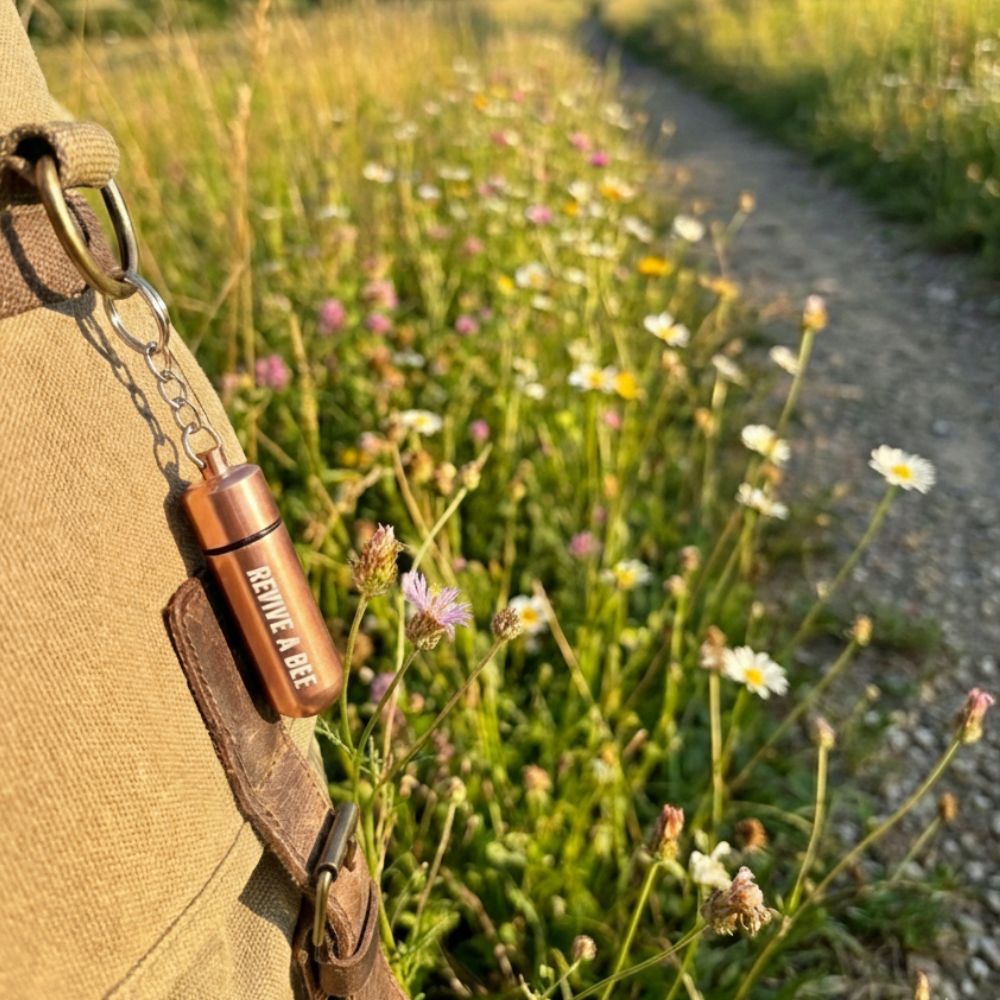
Carry a simple bee revival kit keyring so when you spot an exhausted bee, you can give it a quick, bee-safe energy boost and help it recover. Handmade in the UK with eco-friendly packaging, it’s a small action that makes a real difference.
Creating a sugar-water solution for bees
The quickest way to give a tired, drowsy bee the energy boost it needs is by creating a simple mix of sugar and water to create a form of syrup.
Find a suitable container to create your mixture, and remember you won’t need very much liquid for a single bee, so a small container will be ample.
What ratio of sugar to water?
You will find two different answers to this, and both come from people who know bees.
- The Bumblebee Conservation Trust recommends a 50/50 mix of white sugar and water.
- A thicker mix, roughly 2 parts sugar to 1 part water, is also widely recommended and is usually attributed to the RSPB — though that guidance no longer appears anywhere on their website.
They are solving slightly different problems. A thicker syrup carries more energy per drop, which matters when a bee may only take a single mouthful. A 50/50 mix is thinner, so a very weak bee finds it easier to drink and is less likely to end up coated in something sticky.
For one tired bee, either will do the job. If you are unsure, use 50/50 — it is the harder one to get wrong. Offer a tiny amount on a teaspoon or a bottle cap and place it next to the bee.
What matters far more than the ratio is what you make it from. Use plain white granulated sugar, and nothing else.
- Use white granulated sugar only (no honey, brown sugar, sweeteners)
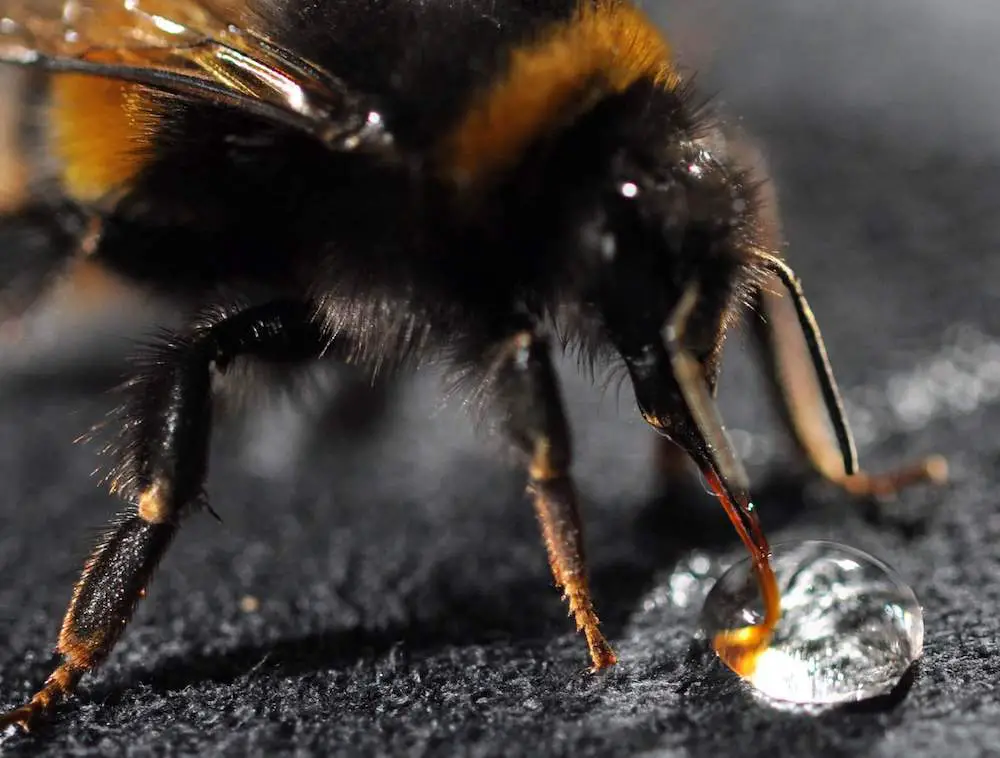
- Offer a tiny amount on a teaspoon or bottle cap (don’t pour it on the bee)
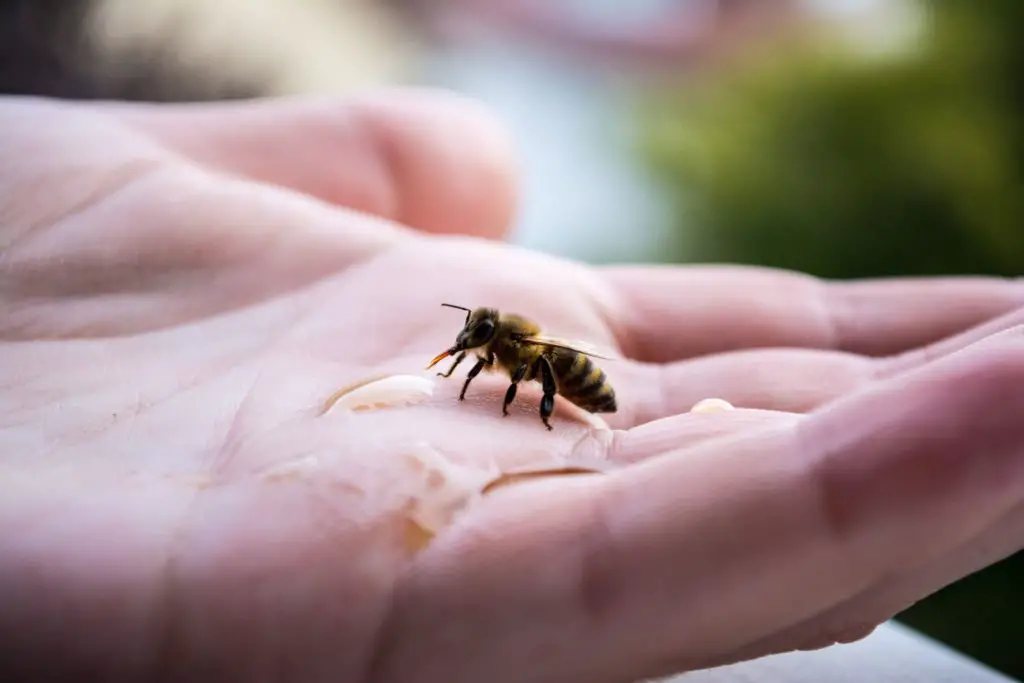
- If it needs help, it will drink on its own. Never force it to drink
A thicker syrup is best for emergencies because it’s closer to nectar and easier for bees to drink in small amounts.
*It can be quite hard to dissolve all the sugar in the water, so don’t worry if some granules still remain after mixing.
Use your bee revival kit
Our bee revival rescue kits help you revive a bee when you’re out on your adventures.
It’s essentially a bee rescue keyring you can carry every day, handy for gardeners, dog walkers, hikers, and outdoor lovers. People also call these a bee first aid keyring, bee rescue keychain, or bee revival kit.
It’s a small capsule that sits neatly on your keys and contains a bee-safe syrup intended as an emergency energy boost.
Just unscrew the vial in your bee revival kit and place it close to your tired bee, exactly as you would with a sugar-and-water mix, as detailed above.
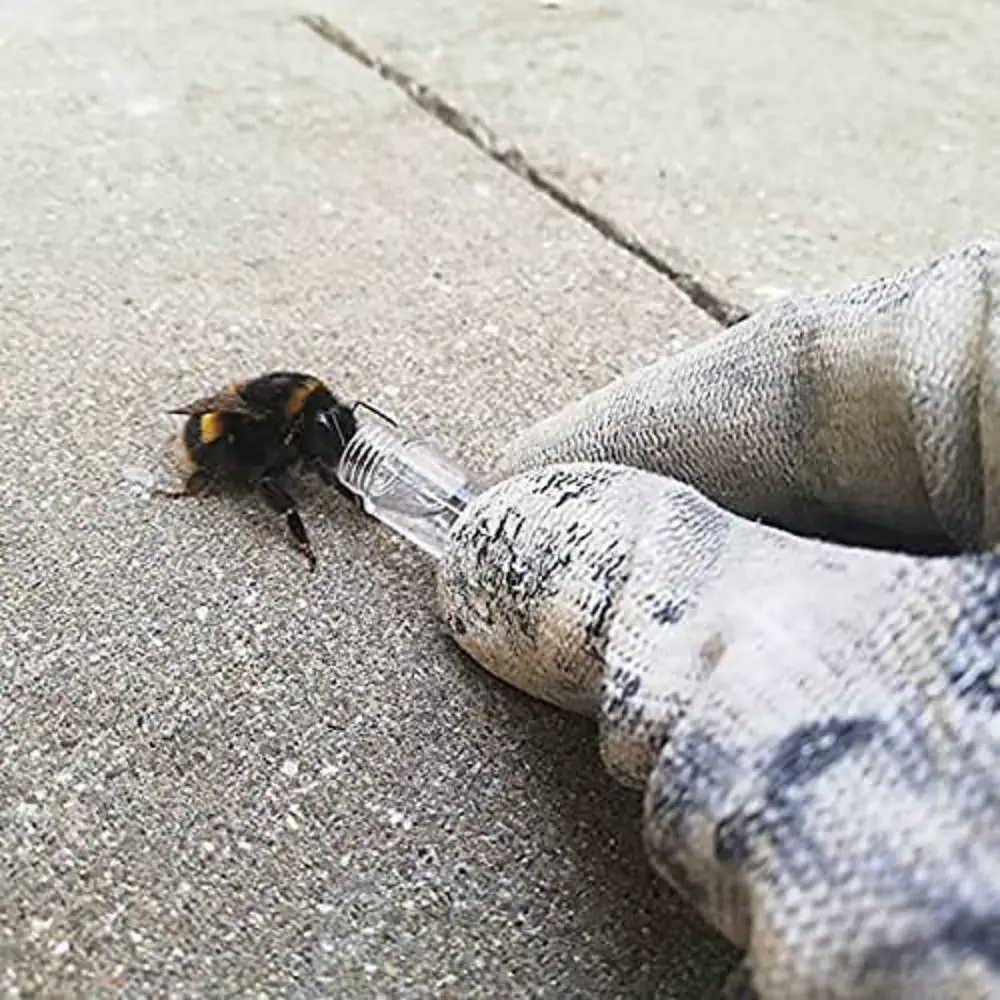
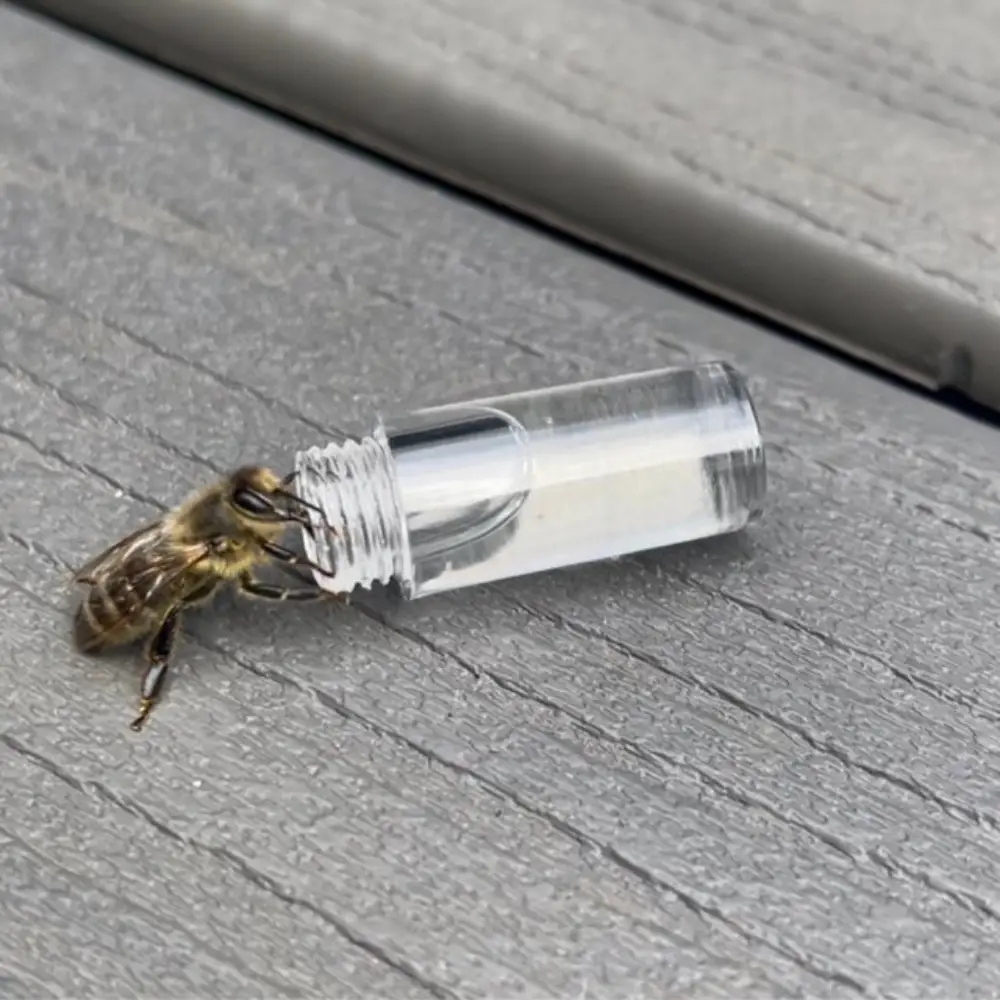
Bee Is Cold and Not Moving (Winter / Cold Weather)
If it’s cold outside (early morning/late evening), a bee can look “lifeless” simply because it’s too cold to fly. This doesn’t always mean it’s dying.
- Move the bee to a dry, sheltered, and slightly warmer spot (out of the wind and rain). A quiet spot near a wall, hedge, or covered porch is ideal.
- If it’s safe to do so, gently slide a piece of paper or card underneath the bee rather than picking it up.
- Once it’s out of the cold, give it a little time. You may see it start to move, groom itself, or slowly warm up.
Flower first:
If you have bee-friendly flowers nearby, place the bee next to them so it can feed naturally.
When to use sugar water:
Only use the emergency sugar-water or bee rescue kit method if the bee is still clearly struggling and there are no suitable flowers around.
Bee Isn’t Flying After Rain (Wet Bee)
After rain, bees can become waterlogged and chilled. A wet bee often can’t fly until it has time to dry and warm up.
- Move the bee to a dry, sheltered place (out of rain and wind), ideally somewhere with airflow but no direct cold draught.
- Don’t dunk it in liquid, don’t try to rinse it, and don’t put it directly on a radiator or in strong heat.
- Give it time to dry. As it warms up, it may begin moving and cleaning itself.
When to use sugar water:
If the bee dries out but still can’t fly and there are no flowers nearby, you can offer a small amount of sugar water using the emergency method above.
For step-by-step help with wet bees, read our guide on how to save a drowning (wet) bee.
Bee on a Windowsill Not Moving
Bees often end up on window sills because they’re drawn to light and warmth, but they can become exhausted, cold, or trapped.
- If it’s in the sun, move it to a safer spot out of direct sunlight and away from foot traffic (or ants/predators).
- Gently slide paper or card underneath the bee and place it somewhere sheltered nearby.
- If you have flowers close by, place it next to them so it can refuel naturally.
When to use sugar water:
If it’s still very sluggish and no suitable flowers are available, offer a small amount of sugar water using the emergency method above, and let the bee drink on its own.
Can you revive a bee with honey?
Never feed bees honey. Honey can carry pathogens/spores that bees may bring back to the colony.
American foulbrood (AFB) is one example of a serious brood disease linked to spores that can be spread via contaminated honey.
When To Revive A Bee
Knowing when a bee needs help or is simply resting is important. Feeding a resting bee sugar water can stress it and may do more harm than good.
Bumblebees (especially queens) are known to take breaks and can rest for 30–45 minutes before flying again. If the bee is safe, dry, and not in immediate danger, give it a little time and observe from a distance.
When you should NOT give sugar water
- If it’s just resting. Bees pause to recover, especially bumblebees. If it’s not in danger, wait and watch for a while first.
- If it’s right outside a nest or hive entrance. Bees close to home may be resting, old, or unwell. Intervening can sometimes disrupt the colony.
- If there are plenty of suitable flowers nearby. The best option is to gently place the bee near nectar-rich flowers so it can feed naturally.
- If it looks injured or unwell. If you notice obvious injury, mites/parasites, sticky residue, or the bee is barely moving despite warmth and time, sugar water may not help, and it’s usually best to place it somewhere safe and sheltered and leave it alone.
If it’s in danger (on a pavement/path), clearly weak, and there are no flowers nearby, sugar water can help as a last resort.
How To Save A Dying Bee?
Even with the best intentions, you may not be able to help. If a bee is at the end of its lifespan or badly injured, it might not recover, and the kindest thing is often to leave it somewhere safe and sheltered.
- If it’s in immediate danger (on a path, on the road, exposed to rain), gently move it to a nearby protected spot using a piece of paper or card.
- Place it somewhere dry and calm, out of wind and foot traffic, and ideally away from ants or predators.
When not to intervene:
- See the guidance above on when not to feed, especially near nest or hive entrances.
- If there are plenty of flowers nearby and the bee is still very lethargic after time to rest and warm up, it may simply be reaching the end of its natural life.
Sugar water is only useful for an exhausted bee that needs a short-term energy boost. If a bee is severely injured or at the end of its lifecycle, sugar water may not help.
How Do You Know If A Bee Needs Saving?
It’s hard to know if a bee is dying or simply tired.
Dying bees often exhibit characteristics associated with sleepiness, such as clinging to flower and plant stems and acting lethargically.
Any bees that show little to no movement in proximity to their nest or hive are probably coming to the end of their lifecycle and are best left alone.
Guard bees tasked with protecting the other inhabitants will often eject unhealthy bees from the nest to avoid any health repercussions to the colony as a whole.
Reviving a bee with a potential disease or infection could actually be detrimental, so as a rule, you should never help bees close to their nest or hive.
If you find a bee in an environment rich in nectar, but it still appears docile, this is likely due to old age, and the best thing you can do is leave it be.
Find out more about how to tell if a bee is dying or tired and what to do in our short guide.
Why Bees Need Our Help
Bees play a vital role in pollinating wild plants and many of the crops we rely on.
- Strawberries
- Apricots
- Beans and Pulses
- Pears
- Courgettes
- Plums
- Apples
- Nut species, including Almonds
This is only a small range of the fruits, vegetables and nuts that bees are responsible for pollinating.
This also extends to a range of crops produced for animal feed, which, if unavailable, would severely affect the world’s meat and dairy industries.
As cities expand and take up more green space, we are slowly reducing the number of resources available to bees.
Plants rich in pollen and nectar are being replaced as we sacrifice green space for further urban development.
Pollution, habitat loss and the implementation of neonicotinoid pesticides have all led to a decline in bee populations critical to our survival as a whole.
This leads us perfectly to the next point we want to mention.
Flower First Policy
The best way to help bees as a whole has been and always will be to plant more flowers rich in nectar and pollen, particularly in urban areas.
This can take the form of creating a wildflower area in your garden, planting more bee-friendly flowers, or even helping a local organisation develop wildlife areas in your community.
You can check out the RHS Plants for Pollinators guide to learn more about the best plant species for bees and pollinators.
Frequently Asked Questions
We’ve created a list of some of the most frequently asked questions about how to revive a bee.
Found a tired bee on the ground. What do I do?
Move it out of danger, try flowers first, and use sugar water only as a last resort if no suitable flowers are nearby.
What ratio sugar water for bees?
There are two accepted answers. The Bumblebee Conservation Trust recommends 50/50 white sugar and water. A thicker mix of 2 parts sugar to 1 part water is also widely used, and is usually attributed to the RSPB, though that guidance is no longer published on their site. For a single tired bee either works — if in doubt, use 50/50. Always plain white granulated sugar: never honey, brown sugar or sweeteners.
Can I leave sugar water out for bees all the time?
No, sugar water is only for emergencies, and you should never leave a sugar-water solution/syrup out for bees.
How long will it take for my bee to be revived?
This will vary from bee to bee, but 5-10 minutes will generally be enough time for your bee to gather energy from your sugar water.
What should I feed a tired bumblebee?
You can revive a tired bumblebee exactly as detailed in this guide, remember bumblebees are a much larger species and may need more syrup to replenish their energy.
How to save a drowning bee?
Saving a wet, drowning bee is a bit different from saving a tired bee. Check out our guide on how to save a drowning bee to learn more.
Is sugar water bad for bees?
Sugar water is excellent for helping tired bees in an emergency.
If too many bees in a colony consume sugar water, you can run the risk of the sugar granulating back at the hive or nest, which can cause problems for the other inhabitants.
For the questions this guide does not cover — what to refill a vial with, how long syrup keeps, whether to leave sugar water out — see the Bee Revival Kit FAQs.